Moving Overseas? A Checklist for Shipping Your Belongings from Australia

Illustration of global freight by sea, air and road between international destinations

Moving overseas is exciting, but working out how to get your belongings there can feel overwhelming. This checklist walks you through the main steps, from deciding what to take to the day your boxes arrive.

8 to 12 weeks before you move

  • Decide what’s worth shipping. Compare the cost of shipping furniture and appliances with buying new at your destination. Appliances may also run on a different voltage.
  • Make a rough list of what you’ll send. Even an approximate volume helps us give you an accurate quote.
  • Get a quote for sea and air freight. Many people send a few essentials by air and the rest by sea.
  • Check your destination’s rules. Some countries allow duty-free entry for used personal goods if you’re moving there, but you may need to have owned the goods for a minimum period.

4 to 8 weeks before

  • Book your shipment so your goods arrive close to when you do.
  • Gather your documents: a copy of your passport, your visa or residence permit, and the delivery address.
  • Start your inventory. List what’s in each box, with an approximate value. Destination customs often ask for this.
  • Arrange insurance. Carrier liability is limited, so transit insurance is worth considering.

2 to 4 weeks before: packing

  • Use strong boxes, and number and label each one.
  • Clean outdoor furniture, bikes, shoes, camping gear and garden tools so they’re free of soil. Many countries inspect for it.
  • Drain fuel from mowers and other equipment.
  • Wrap fragile items well and mark the boxes clearly.
  • Keep valuables, jewellery, cash and important documents with you.

What you can’t send

Don’t pack flammable or dangerous goods, such as aerosols, paint, fuel, gas bottles and fireworks, or loose lithium batteries. Perishable food, plants and soil are not accepted. Firearms and some Australian cultural heritage objects and native wildlife products need permits to leave Australia.

Do you need export paperwork?

Usually not. Personal effects are exempt from Australia’s export declaration requirement. Your main paperwork will be for customs clearance at the destination, which our overseas agents handle.

Pickup and arrival

  • We collect your goods, or you drop them off by arrangement.
  • Your shipment is booked on the next suitable sailing or flight.
  • Our agent at the destination clears it through customs and arranges delivery to your new address.

Ready to get a quote?

Find out more about shipping personal goods overseas, or contact Fastrak with a list of what you’re sending and where it’s going.

BMSB Season 2026–27: What Australian Importers Need to Know

Every year from September to April, Australia applies extra biosecurity measures to stop the brown marmorated stink bug (BMSB) from arriving in cargo. If you import from Europe, North America or other target countries during this period, these rules can add cost and delay if you’re not prepared.

Key dates for 2026–27

The 2026–27 seasonal measures apply to target goods shipped between 1 September 2026 and 30 April 2027 inclusive. The shipped-on-board date on your bill of lading is what counts.

Which countries are affected?

The target risk countries include the United States, Canada, and most of Europe, including Germany, Italy, the Netherlands, France, Spain, Belgium, Austria, Greece and Poland. Vessels from China, Japan and the Republic of Korea are subject to heightened surveillance. Always check the Department of Agriculture, Fisheries and Forestry’s current list before you ship.

Which goods are affected?

Target high-risk goods

These must be treated for BMSB, either before they leave the origin country or on arrival in Australia. They include a wide range of manufactured goods, such as machinery, vehicles and parts, steel, timber, stone and ceramic products, and many types of equipment.

Target risk goods

These don’t need mandatory treatment, but they can be randomly selected for onshore inspection. They include goods such as plastics, rubber, paper and some chemicals.

Treatment options

  • Offshore treatment: by a treatment provider approved by the Australian Government, with a treatment certificate sent with your documents. This is strongly recommended.
  • Onshore treatment: on arrival in Australia. Capacity is limited, so there can be queues, extra storage costs and delays.

Common treatments include heat treatment and fumigation. For 2026–27, ethyl formate has been added as a new onshore treatment option. For FCL containers, treatment must be done at the container level, so goods can’t be unpacked before they’re treated.

Treatment carried out by a provider that isn’t on the approved list is not valid. Check your supplier’s provider before you ship.

How to avoid delays

  1. Check whether your goods are target high-risk or target risk goods before you order.
  2. Ask your supplier to arrange offshore treatment with an approved provider.
  3. Make sure the treatment certificate is ready when the goods ship.
  4. Allow extra time for shipments that arrive during the season.
  5. Avoid mixing high-risk goods with other cargo in the same container.

We can help

We’ll check whether your goods fall under the measures and coordinate treatment with your supplier and our overseas agents. Read our guides to shipping from the USA, Germany, Italy and the Netherlands, or contact our team.

How Import Duty and GST Are Calculated in Australia

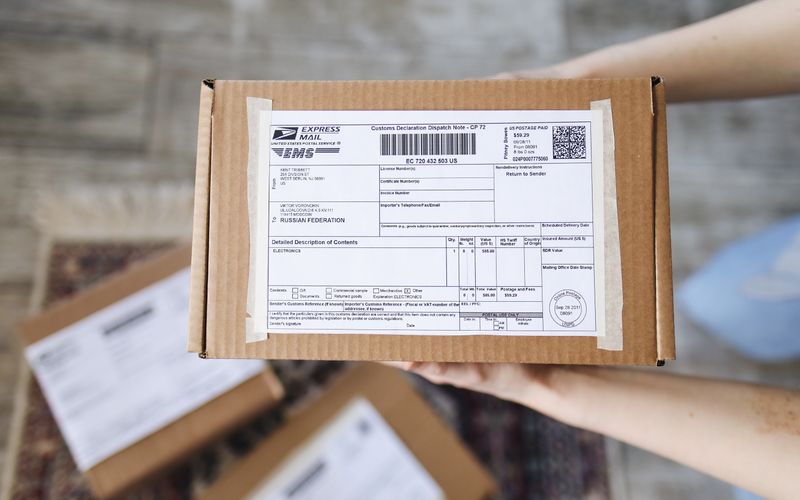
Parcel with a customs declaration label – customs clearance for imports

When your goods arrive in Australia, you may need to pay customs duty and GST before they’re released. Understanding how these are worked out helps you price your products properly and avoid surprises.

Goods worth AUD 1,000 or less

For most goods with a value of AUD 1,000 or less, no duty or GST is collected at the border, and a full import declaration isn’t needed. Tobacco and alcohol are exceptions. GST on low-value goods bought online is usually charged by the overseas seller at checkout instead.

Above AUD 1,000, a full import declaration must be lodged, usually by a licensed customs broker, and duty and GST are calculated as below.

Step 1: The customs value

The customs value is usually the price you paid for the goods, converted to Australian dollars using the exchange rate on the day they were exported. In most cases this is the FOB value, which excludes international freight and insurance.

Step 2: Customs duty

Duty is a percentage of the customs value. The rate depends on the tariff classification of your goods. Many goods are duty-free, and the most common general rate is 5%.

If your goods come from a country with a free trade agreement, such as China, India, Malaysia, Singapore, Thailand or the USA, the duty rate may be reduced to zero, as long as you have the correct origin documents. See our country guides for the details.

Step 3: GST

GST is 10%, but it isn’t charged on the customs value alone. It’s charged on the value of the taxable importation, which adds together:

  • the customs value
  • customs duty
  • the cost of international transport and insurance to Australia
  • any wine equalisation tax, if applicable

A worked example

Item Amount
Customs value (FOB) $20,000
Duty at 5% $1,000
International freight and insurance $2,000
Value of the taxable importation $23,000
GST at 10% $2,300
Total duty and GST $3,300

If the same goods qualified for a free trade agreement, duty would be $0, and GST would be 10% of $22,000, or $2,200.

Other charges to budget for

  • Import processing charge: a government fee on each import declaration
  • Biosecurity fees: for document assessment, inspection or treatment if required
  • Customs broker and forwarder fees: for preparing and lodging your entry
  • Port and terminal charges: for handling the container or cargo in Australia
GST-registered businesses can usually claim import GST back as a credit on their BAS. Under the ATO’s deferred GST scheme, approved importers can also defer paying it until their BAS is due, rather than paying it at the border.

Let us work it out for you

Duty depends on the exact classification of your goods, so it’s worth checking before you order. Our customs clearance team works with licensed customs brokers to classify your goods correctly and confirm what’s payable. Ask us for an estimate.

Incoterms Explained: A Simple Guide for Australian Importers

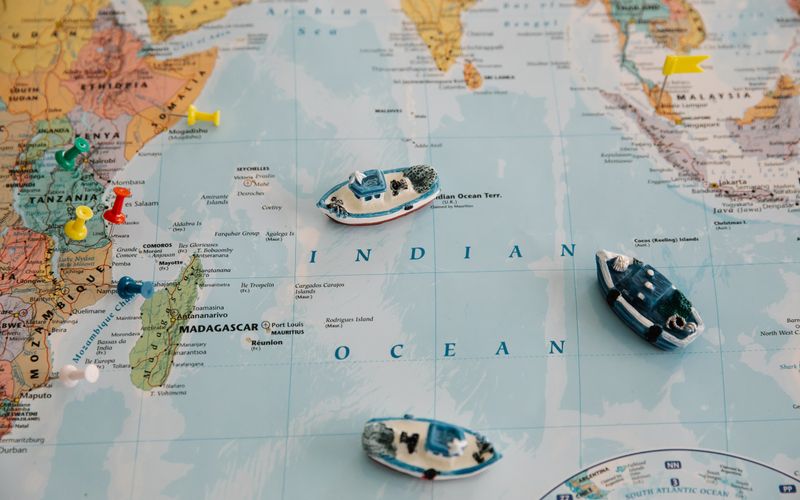
Model cargo ships and pins on a world map – countries we ship from to Australia

Incoterms are the three-letter terms, such as FOB, CIF and EXW, that appear on your supplier’s quote and invoice. They decide which costs and risks your supplier pays for and which you pay for. Agreeing the wrong term can mean paying twice for freight, or finding unexpected charges when your goods arrive.

The current version, Incoterms 2020, has 11 terms. Here are the ones Australian importers see most often.

The most common Incoterms

Term Your supplier pays for You pay for
EXW (Ex Works) Making the goods available at their premises Everything else: pickup, export clearance, freight, import
FCA (Free Carrier) Export clearance and handing goods to your carrier Main freight and everything after
FOB (Free on Board) Delivery onto the ship at the origin port, including export clearance Sea freight, insurance and all Australian costs
CFR (Cost and Freight) Sea freight to the Australian port Insurance, unloading and all Australian costs
CIF (Cost, Insurance and Freight) Sea freight and minimum insurance to the Australian port Australian port charges, clearance, duty and delivery
DAP (Delivered at Place) Freight to your premises Import clearance, duty and GST
DDP (Delivered Duty Paid) Everything, including Australian duty and GST Unloading at your premises

Which term should you choose?

FOB: usually the best balance

With FOB, your supplier handles everything in their own country, which they know best, and you control the international freight. That means you choose the forwarder, see the real freight cost, and avoid hidden mark-ups.

Be careful with CIF and CFR

CIF and CFR look convenient because the freight is “included”. But the supplier’s forwarder often recovers its costs through high destination charges in Australia, which you pay on arrival. Ask for a breakdown of Australian charges before agreeing to these terms.

EXW: only if you’re ready to handle export

EXW gives the lowest product price, but you become responsible for export clearance in the supplier’s country. That can be difficult in some countries, so FCA is often a better choice.

DDP: easy, but less control

DDP means your supplier arranges and pays everything, including Australian duty and GST. It’s convenient, but you can’t claim the GST back through your own business, and you have little control over timing.

Incoterms decide who pays and when risk passes, not who owns the goods. They also don’t cover payment terms; agree those separately with your supplier.

Get it right before you order

The Incoterm is agreed when you place your order, so talk to us before you confirm with your supplier. We can quote the freight for each option and help you compare the true landed cost. See our country import guides or contact our team.

FCL vs LCL: Which Sea Freight Option Is Right for Your Import?

When you import by sea, one of the first decisions is whether to book a full container (FCL) or share one with other importers (LCL). The right choice can save you hundreds or even thousands of dollars, so it’s worth understanding how each works.

What is FCL?

FCL (full container load) means you book a whole 20ft or 40ft container for your goods only. The container is packed and sealed at your supplier, shipped, and only opened again when it reaches you or is inspected in Australia.

  • 20ft container: roughly 28–33 cubic metres of usable space
  • 40ft container: roughly 58–67 cubic metres
  • 40ft high cube: about 30cm taller, for light, bulky goods

What is LCL?

LCL (less than container load) means your goods share a container with other shipments. Your cargo is delivered to a consolidation warehouse at origin, packed with other freight, shipped, then unpacked at a depot in Australia before delivery.

LCL is charged on weight or measure, whichever is greater, with 1 cubic metre treated as 1,000kg. So a pallet that measures 1.2 cubic metres and weighs 300kg is charged as 1.2 “revenue tonnes”.

Cost: where’s the break-even point?

As a rough guide, LCL is usually cheaper for shipments under about 13–15 cubic metres. Above that, a 20ft container often costs the same or less, and gives you a few other advantages. The exact point depends on the route, the season and local charges, so it’s always worth getting both quotes.

FCL LCL
Best for Larger shipments, from about 13–15 m³ Smaller shipments
How you pay A flat rate per container Per cubic metre or tonne
Handling Sealed at origin, less handling Packed and unpacked at depots
Transit time Usually faster Extra time for consolidation and unpacking
Risk of delay Only your goods are inspected Another shipper’s cargo can hold up the container

Other things to consider

Delivery and unpacking

FCL containers can be delivered on a side-loader for you to unpack on site, or unpacked at a depot and delivered on pallets. If you don’t have a forklift or dock, depot unpacking is often easier. With FCL you also need to return the container within the shipping line’s free days to avoid detention charges.

Fragile or high-value goods

Because FCL cargo is handled less, it’s often the better choice for fragile, valuable or awkwardly shaped goods, even if the shipment is a little under the break-even point.

Biosecurity

FCL and FCX containers need a packing declaration for Australian biosecurity. You can download our packing declaration form. In an LCL container, if any one shipment needs inspection, the whole container can be delayed.

Our advice

Send us your cargo’s dimensions, weight, origin and Incoterms, and we’ll quote both options so you can compare. Learn more about our sea freight services, or see our country guides, starting with shipping from China.